Beach Reads for June
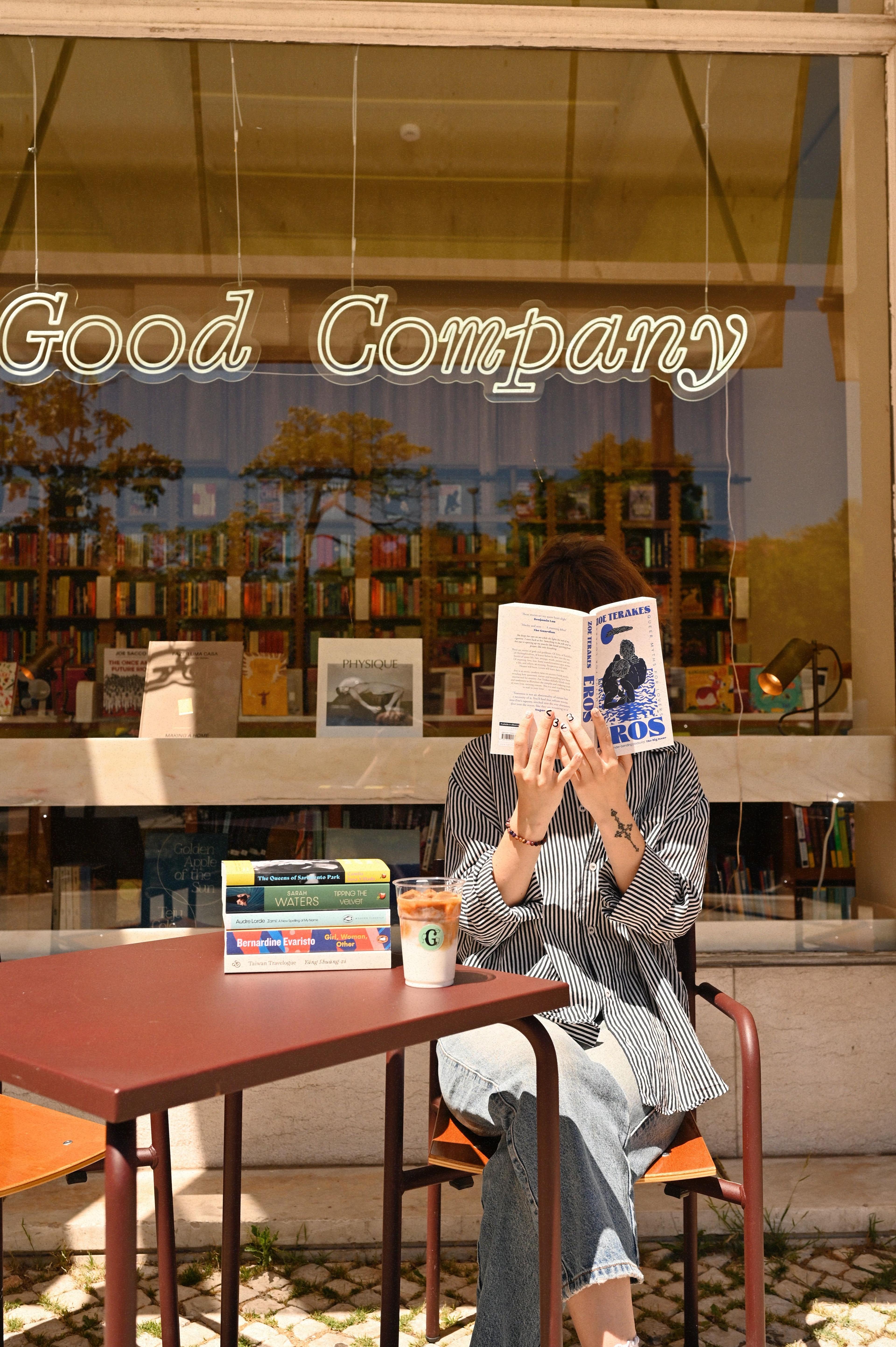
As the weather begins to heat up and all we suddenly want to do is be on the esplanade with a cold drink, our team has curated a list of perfect summer reads to help you read through the warmer months. Because June is Pride Month, we decided to make this list a celebration of our favorite queer reads. From lush romances to hard-hitting memoirs, this list will have all of your lazy days under the sun covered.
Alex’s pick
The Queens of Sarmiento Park by Camila Sosa Villada
In a book where some characters are 178 years old and others can turn into birds and wolves, and a sort of travesti heaven exists, The Queens of Sarmiento Park is at the same time magical, as it is painfully real, detailing the lives of transvestite prostitutes that work in Sarmiento Park, Cordoba, where they work, gather, and create community to resist the everyday violence that seeks to erase them.
The Queens of Sarmiento Park is a story that will linger in your mind long after you’ve finished reading it, with beautiful prose that might make you cry before you’ve even finished the preface, and a necessary portrayal of voices that are often unrepresented in literature, especially in the English-speaking world.
“To them, calling us travestis was a way of insulting us. But we weren’t strangers. We were already here, the same as you, and had been for a very long time. The abundance of these lands belonged to us too. (...) I reclaim the stonings and spittings, I reclaim the scorn. You may ask how it can be that a writer proudly identifies herself with an insult. My answer is that you’re looking for the way out up there, where you think your thoughts are formed. So elevated, useful, precise. We, after years and years of holding back the travails of Latin America with our bodies, know that you have to delve deep, go down. We know it’s better to escape through tunnels than try to leap over walls”
Lia’s pick
Zami: A New Spelling Of My Name by Audre Lorde
"To whom do I owe the woman I have become?"
In June, our Queer Book Club will discuss Zami: A New Spelling Of My Name, by Audre Lorde. I picked it up with some admitted intimidation, for I had known Lorde only from her well-established and distinguished reputation as an activist, political essayist, and poet. Instead of the hesitancy I was prepared to encounter, instead, I was met with a tender, nostalgia-filled memoir that instantly absorbs me whenever (and wherever) I pull it out of my bag.
Amongst themes of race, immigration and war, Audre Lorde begins to understand herself as a lesbian. In a time heavily characterised by political upheaval and marginalisation, the sheer respect and reverence she felt for the women around her was a steady port. Her journey of self-discovery was not instant (because it never is), but instead a slow and gradual development of the way in which she began to make sense of her feelings through her experiences with other women. I was so moved by Lorde’s experience of recognising herself as a lesbian because of the deep admiration she feels for women, and how, in her journey of self-revelation, she was always surrounded by examples of powerful womanhood.
Through poetic prose and unflinching honesty, even in her most intimate admissions, Zami is an indispensable and deeply moving read, serving to also remember who paved the way we can so freely walk today.
Vanessa’s pick
Girl, Woman, Other by Bernardine Evaristo
Bernardine Evaristo’s Booker Prize-winning novel is truly a book for everyone. It is an insightful work of social critique written as an unpretentious page-turner so engaging it may make you miss your stop on the bus.
The novel follows twelve characters, mostly women, including one non-binary character, and most of whom are queer, as they navigate life in modern-day Britain. It spans a range of ages and includes characters born in the UK and those of the Windrush generation.
This is a truly intersectional feminist novel about the Black experience in the UK that also recognises modern-day womanhood and queerness in its diverse female and gender-free identities. There really aren’t many novels like this.
“I wanted to put presence into absence. I was very frustrated that Black British women weren’t visible in literature. I whittled it down to 12 characters – I wanted them to span from a teenager to someone in their 90s, and see their trajectory from birth, though not linear. There are many ways in which otherness can be interpreted in the novel – the women are othered in so many ways and sometimes by each other. I wanted it to be identified as a novel about women as well.”Bernardine Evaristo on the ‘othered’ female, in an interview with The Guardian.
Maria’s pick
Eros: Queer Myths for Lovers by Zoe Terakes
Zoe Terakes brings us a collection of short stories that reimagine and retell five Ancient Greek myths through the lens of queer and trans experience: Iphis and Ianthe, Eurydice, Artemis and Kallisto, Hermaphroditus, and Icarus and Apollo. What makes these stories especially powerful is that they aren’t modern inventions imposed onto old myths. Their connections to queerness and transness have always been there, woven into the original tales.
In this collection, Zoe reminds us that queer and trans people have always existed, and that our stories have always been here too, often hidden, overlooked, or erased. By bringing these myths into a new light, they reclaim what was there all along.
It’s a book you won’t be able to put down. One that will bring tears to your eyes, make you long and yearn, and leave you feeling deeply connected to nature, the past, and yourself.
Tosia’s pick
Taiwan Travelogue by Yang Shuang-zi
Translated from Mandarin by Lin King
Everyone has already heard of this novel’s greatness, but if you haven’t or you are still wondering if the International Booker Prize 2026 Winner will be your next read celebrating Pride Month, wonder no more.
This book offers a multilayered journey; published as a disguised translation from Japanese to Mandarin of a travel journal of a Japanese writer Aoyama Chizuko, then translated by Lin King into English. The story is happening while Taiwan was under Japanese rule in the 1930s. Two women, a writer Aoyama Chizuko and O Chizuru, her local translator, explore Taiwan through food and culture, creating a tender bond that bends the lens of colonial structures and class division of that time.
I am writing this recommendation as a reader who is still in the process of savouring this book. I am definitely taking my time as those pages contain an incredibly delicious homage to food. Not only does Yang explore the difficult topic of colonialism through cuisine, but also topics of class and forbidden love between two women.
Giovanna’s Pick
Tipping the Velvet by Sarah Waters
This lush epic (self)love story set in a seaside town in England is the perfect queer novel to usher in summer during Pride. Set in Victorian England, we follow Nan King, the daughter of an oyster catcher. Nan falls in love with the theater and, more specifically, with Miss Kitty Butler, a cross-dressing singer who comes to her small town. What ensues is a lush journey of self-discovery, in which Nan finds her own way to the stage, exploring many different gender identities and presentations. Waters is a phenomenal researcher who truly embodies the period’s many contradictions while shedding light on the underground sexual revolution that was very much alive in Victorian England.
“When I see her,” I said, “it’s like - I don’t know what it’s like. It’s like I never saw anything at all before. It’s like I am filling up, like a wine-glass when it’s filled with wine. I watch the acts before her and they are like nothing - they’re like dust. Then she walks on the stage and - she is so pretty; and her suit is so nice; and her voice is so sweet… She makes me want to smile and weep, at once. She makes me sore, here.” I placed a hand upon my chest, upon the breast-bone. “I never saw a girl like her before. I never knew that there were girls like her…” My voice became a trembling whisper then, and I found that I could say no more. There was another silence. I opened my eyes and looked at Alice - and knew at once that I shouldn’t have spoken; that I should have been as dumb and as cunning with her as with the rest of them. There was a look on her face - it was not ambiguous at all now - a look of mingled shock, and nervousness, and embarrassment or shame. I had said too much. I felt as if my admiration for Kitty Butler had lit a beacon inside me, and opening my unguarded mouth had sent a shaft of light into the darkened room, illuminating all. I had said too much - but it was that, or say nothing.”
This novel is the definition of Lush, from the salt and brine of chucked oysters to the erotic textures of velvet curtains and backstage laces and silks. Sarah Waters is the quintessential sapphic writer, bringing every page to life with the plurality of feminine queer identities. The perfect read for summer, this novel will have you aching with hunger for life.