If you are anything like me, you are probably very excited for the premiere of Christopher Nolan's The Odyssey, and if you are anything like me as a reader, you have been fascinated with the ancient world, and specifically ancient Greece, from a very young age. The Odyssey is arguably the most influential story in the Western canon (alongside the Bible), defining what we now think of as a hero's journey. Besides that, it is also a phenomenal historical document of attitudes in antiquity towards religion, gender, hospitality, and, more importantly for our purposes, storytelling. Full of monsters, family drama, and angry Gods, Odysseus's journey continues to influence art in all forms and many indirectly. From Ulysses by James Joyce to countless modern retellings, it is an imperative work for all who wish to consider themselves truly well-read.
This summer, I am doing a deep dive into all things ancient to keep the spirit of Homer alive long after I leave the cinema. Here are a few of my recommendations if you'd like to do the same.
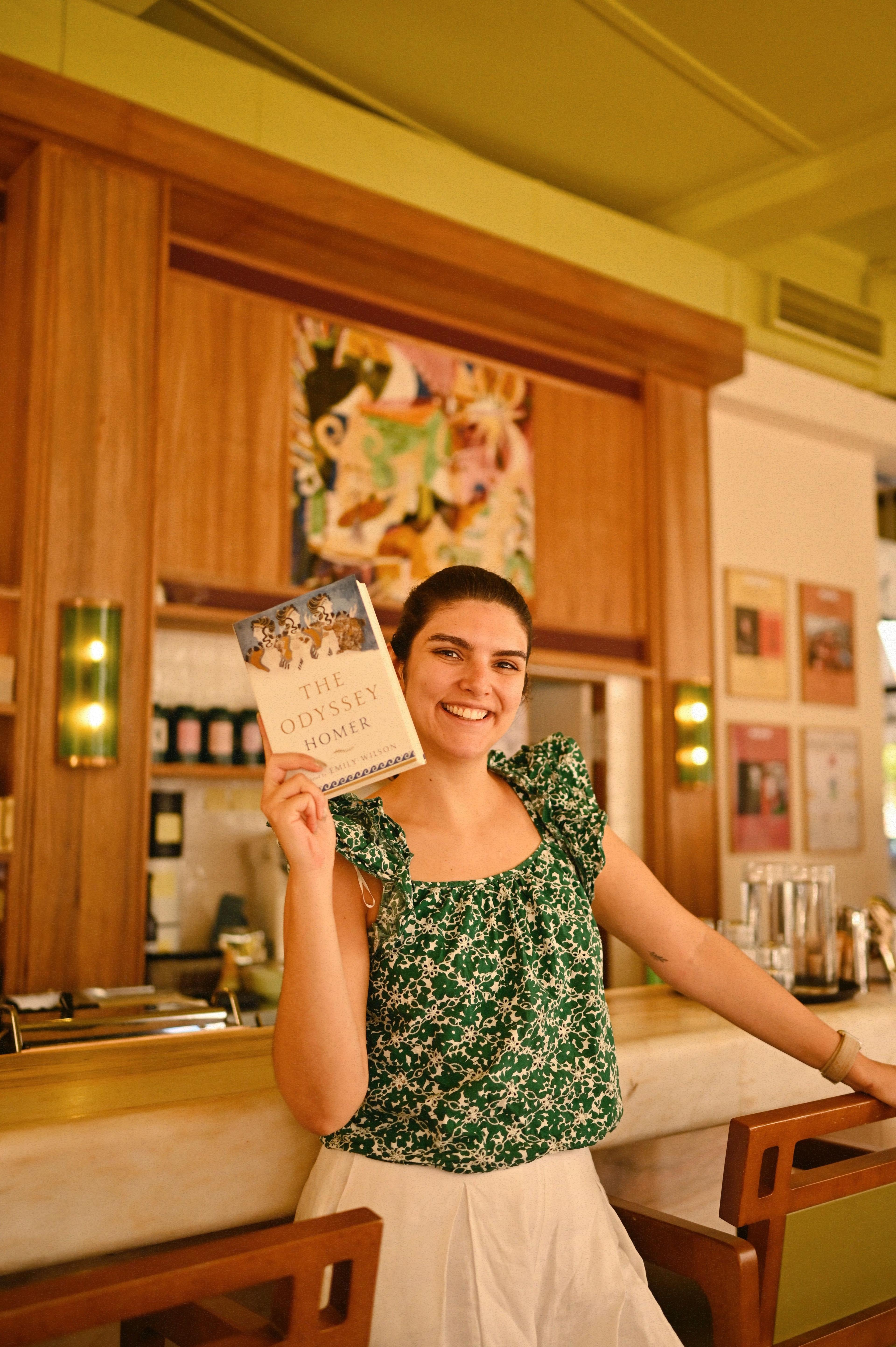
I. The Odyssey by Homer, Translated by Emily Wilson
Of course, there's nothing better than the source text itself, but specifically, I recommend Emily Wilson's translation. Besides it being this translation that was used by Nolan when devising the movie, Wilson was the first woman to publish a translation of The Odyssey in English. Her translation is rooted in accessibility and giving the text a new life in the 21st century. Although controversially written in iambic pentameter verse, Wilson's is a great gateway translation for a more hesitant reader of the classic who also wants to experience beautiful language.
II. Any book by Natalie Haynes
Haynes, like Wilson, is a classicist, but she has made a career as a novelist, specifically of ancient Greek retellings. With topics ranging from a contemporary adaptation of the Theban Cycle to nonfiction books on the Greek Myths, Haynes ' oeuvre is full of high-quality fiction and extremely accessible nonfiction. To keep on theme with the Odyssey, my recommendation is that you start with A Thousand Ships, a retelling of the Iliad, from the point of view of Helen of Troy (or is it of Sparta?)
While better known for her debut The Song of Achilles, based on the titular hero's life, her sophomore novel Circe is truly, in my opinion, Miller's best work yet. Following the life of the witch-goddess Odysseus encounters during his voyage home, Miller traces Circe's life long before the events of the Odyssey and long after, giving the relatively minor figure of Greek mythology a well-deserved moment of protagonism.
IV. The Silence of The Girls by Pat Barker
Pat Barker's Trojan Trilogy is an extremely interesting take on both the Iliad and the Odyssey, embarking, over the course of now three titles, into the lives of the many affected female characters who have historically been sidelined. From captured princesses and enslaved concubines to witches and human oracles, Barker brings a thoughtful feminist lens to the great ancient epics.
V. The Penguin Book of Classical Myths by Jenny March
This collection of the Greek myths is a great companion for both novices and nerds of antiquity. A comprehensive guide with everything from the origins of the world to all the minor characters and Gods you might. Also, if you want to learn about the Odyssey (or refresh your memory) from a trusted source without reading the entire text, March has a phenomenal chapter on both The Odyssey and its precursor, The Iliad.
VI. The Oresteia by Ted Hughes.
The original Oresteia is a trilogy of plays written by Aeschylus in the 2nd Century B.C., detailing the domestic drama of Agamemnon's household before and after his return from the Trojan War. One of the most important figures in the Iliad, Agamemnon, is key to Odysseus' departure from Ithaca and to Odysseus' later preconceptions about what he might encounter upon his return home. In this version, we see renowned English poet Ted Hughes' interpretation of this incredible saga, with his signature poetic style.
VI. Greek Myths by Jean Menzies
DK makes the best books for the insatiably curious little reader, and this primer on Greek mythology is no different. Full of in-depth fun facts and beautiful illustrations, this book is for both young readers and the young at heart.