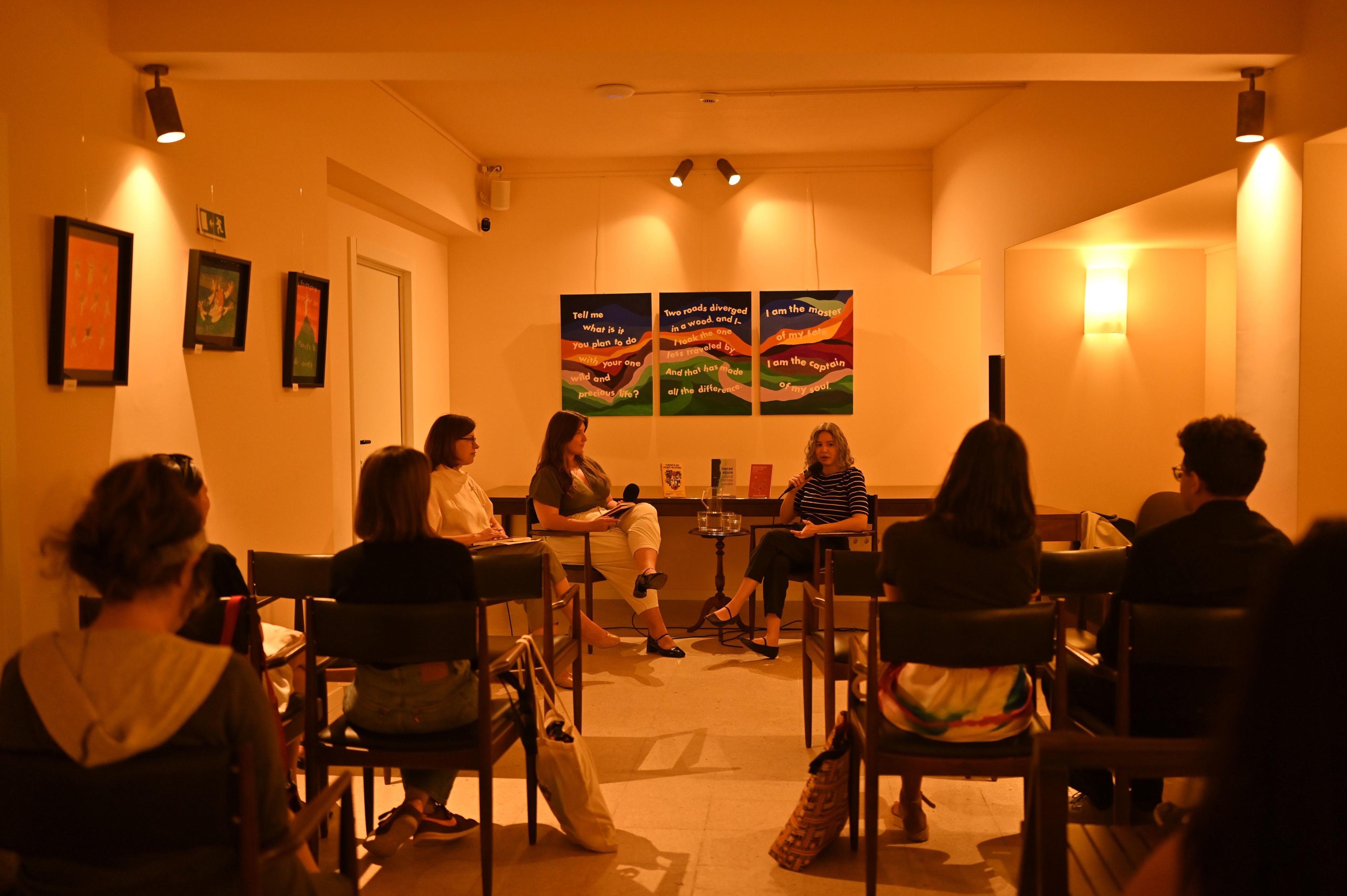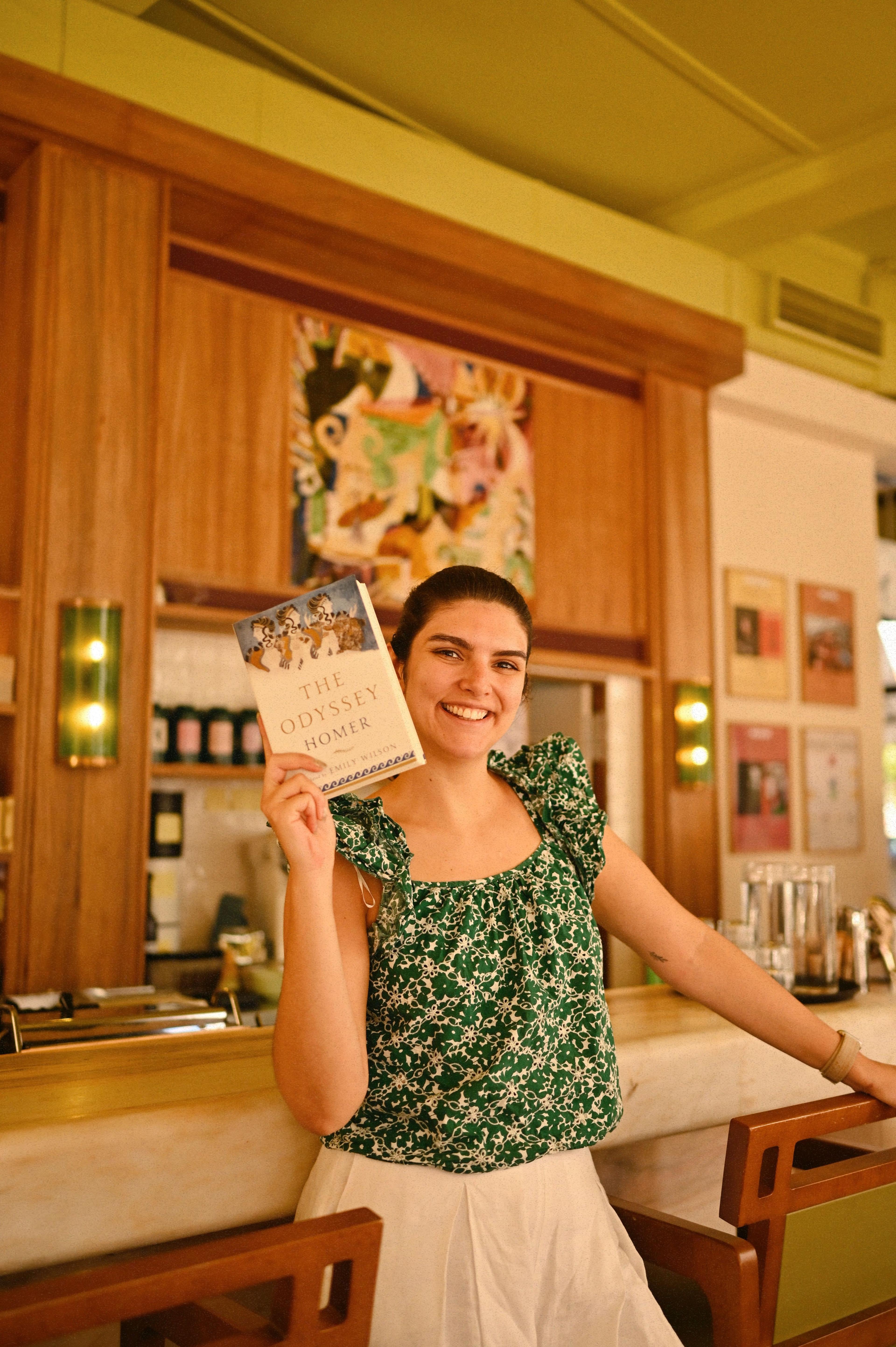
We recently published a piece on our substack explaining how the lessons learned during our first two years have changed our perspective and approach to book curation. Here, you'll find our curation guidelines published in full. If you're interested in how an independent bookstore chooses books, and some of the surprising obstacles it has to overcome, we hope you'll take a moment to read that essay. As always, we welcome any comments or discussion.
Understanding our Mission
At Good Company, we aim to be tastemakers, to promote and share literature that we love, believe in, and want to stay alive. This is a space where the best of the literary tradition resides next to innovative and remarkable contemporary voices. We aim to be a space where readers, from the most dedicated to the most casual, can be delighted or awakened by new and new-to-them voices, and where buried or forgotten classics can be rediscovered and given fresh meaning.
Discovery and education are what set us apart; anyone can ask Chat GPT or go to Amazon/FNAC/Bertrand for the same 100 books. Customers can always visit these platforms and get the exact title they want faster and cheaper. From a business perspective, for our position in the market to make sense we need to offer something different, so we offer something deeper. This of course places a high expectation on the team to know the selection, to be able to offer exceptional personalized service, and to have a catalog that is both broad enough and special enough to entice a curious customer to buy something even when we don’t have their first pick.
Our book curation should reflect both our team and our aspirations for our reading community. We should always aim to be a resource for readers, regardless of their reading level or interest. But crucially, we must recognize that not every person who walks through our door will be our customer—and that’s ok. As booksellers and curators we are also critics; we know what we like and we want to show our audience what we see in a book or author. Not everyone will be convinced; yet, this is the mission.
Our Values
We are a highly curated bookshop that chooses to prioritize the quality of writing and of ideas above all else. Fundamentally, we define our values as humanist. We believe that every individual has an inherent right to liberty and free expression.
Thus, we respect and champion genuine discourse, and a variety of opinions and identities, even (and perhaps especially) when we do not personally agree. We believe this is the bedrock of a democratic society and that the failure to respectfully understand and engage with others is a dangerous trait of our moment.Yet, we acknowledge the existence of truly harmful ideas and we see it as our duty to face them; failure to understand and confront these means blinding ourselves to a full knowledge of the human experience for the sake of temporary comfort. Literature is and should continue to be a mechanism for this liberal, humanist, and ultimately moral education.
We do not pander to extremism or authoritarianism; this goes against our humanist values (and tends to make for poor writing.) We wish to honor the dignity and autonomy of every reader to interpret and discuss ideas freely. But, with our limited shelf space, we must make certain decisions about what titles we carry. Specifically, we do not wish to platform or support through our purchasing living individuals whose actions and ideas do active harm and go against our values.
Building our Catalog
Our foundation as curators begins within the Great Books tradition. The Classics, meaning those titles that have withstood the test of time in both critical and popular appeal and have formed an integral part of the development of our culture, inform our knowledge and taste when choosing contemporary titles.
Our total book selection is divided into a fixed “Good Company Canon” covering all genres, and makes up about half of all books in our store. This canon will be updated infrequently, and should remain consistently in stock. The remaining half is made up of a rotating selection, updated quarterly. Qualifying New Releases will be updated weekly. Each genre has a fixed number of titles that should be maintained by the quarterly rotation, dictated by the physical space of our shelves and our audience’s general reading preferences. Because of our space limitations, we must only select what we deem to be quality books.
How do we assess this? We judge books by their aesthetic value (the beauty or innovation of their prose), their cultural and historical impact, the clarity and effectiveness of their rhetoric… but above all for the power of their ideas.
In short, we want our catalog to present a diversity of ideas, well crafted, and clearly presented.
Criteria
Book curation is an act of deliberation that seeks to balance the aesthetic, the philosophical, and the practical. When choosing titles to maintain or add to the catalog, make sure that they meet at least three of the following criteria.
- Does this book have historical merit?
This book created discourse, genre innovation, or historical legacy that, even if not modern or current, endures as timeless– it changed the culture.
- Does it have critical/aesthetic merit?
The quality of the writing, storytelling, or research is excellent and deserves our backing. Here, it is important to know yourself as a reader when becoming a curator. Know what you like, but be self-aware enough to know that not everything you like is good. You should be able to identify quality writing even if it is/was controversial or you don’t necessarily like it.
- Does it spark an intellectual conversation?
Does this book have enough genuine (meaning you don’t need to go digging, twist the text, or get creative to prove) substance to prompt an intellectual discussion? Does it challenge you or teach you something? We define intellectual as: questions of morality, religion, politics, identity, ethics, philosophy, science, art, Truth, etc. (All the questions great literature probes that you can’t properly discuss on social media.)
- Is it timely?
This book is timely and not expired; it adds to our understanding of current events rather than sensationalizing them. We want everything we carry to have been curated, thus the titles in this section should always have a purpose of furthering current discourse. We are not a big-box-store and cannot be all-inclusive. We must understand why we wish to be part of contemporary discourse and that our role is that of a filter more than an encyclopedia. We avoid the generic, cheaply written, and derivative.
- Does it add to a diversity of ideas?
While we are highly selective, we must not be a monolith or fall into a niche. While we may champion causes we care about, we must not shut out that which we might be blind to. As such, there must be nuance on the shelves.
Ask yourself: does this book expand our worldviews as booksellers and take us out of our comfort zones? Does it add something new and unique to our shelves? Will a spectrum of readers find something? We know that this will be a fragile balancing act between the aesthetic merits of the work and our personal values. But crucially we must not build another echo chamber; genuine discourse is fundamental to our stated values.
In summary, the curatorial experience at Good Company should reflect thoughtfulness, a balance between our personal passions, causes, and interests; our appreciation for the beauty and power of written word; and the important ideas that literature preserves.
For the team
We want to be able to know, even if on the surface, every book in our catalog. This requires that we be well-informed and well-versed in literature, both classic and contemporary. The curators should be interested in what is sold, and not only focused on filling the shelves. Take time to know the catalog, understand customer patterns through sales and conversations, and most importantly, listen to visitors and provide them with options that fulfill their request while also reflecting the level of quality we strive to be defined by. We are first and foremost tastemakers; we serve our community by setting an example that we hope will help to shape it.